What Crystals Can Go in Water? A Safety Guide
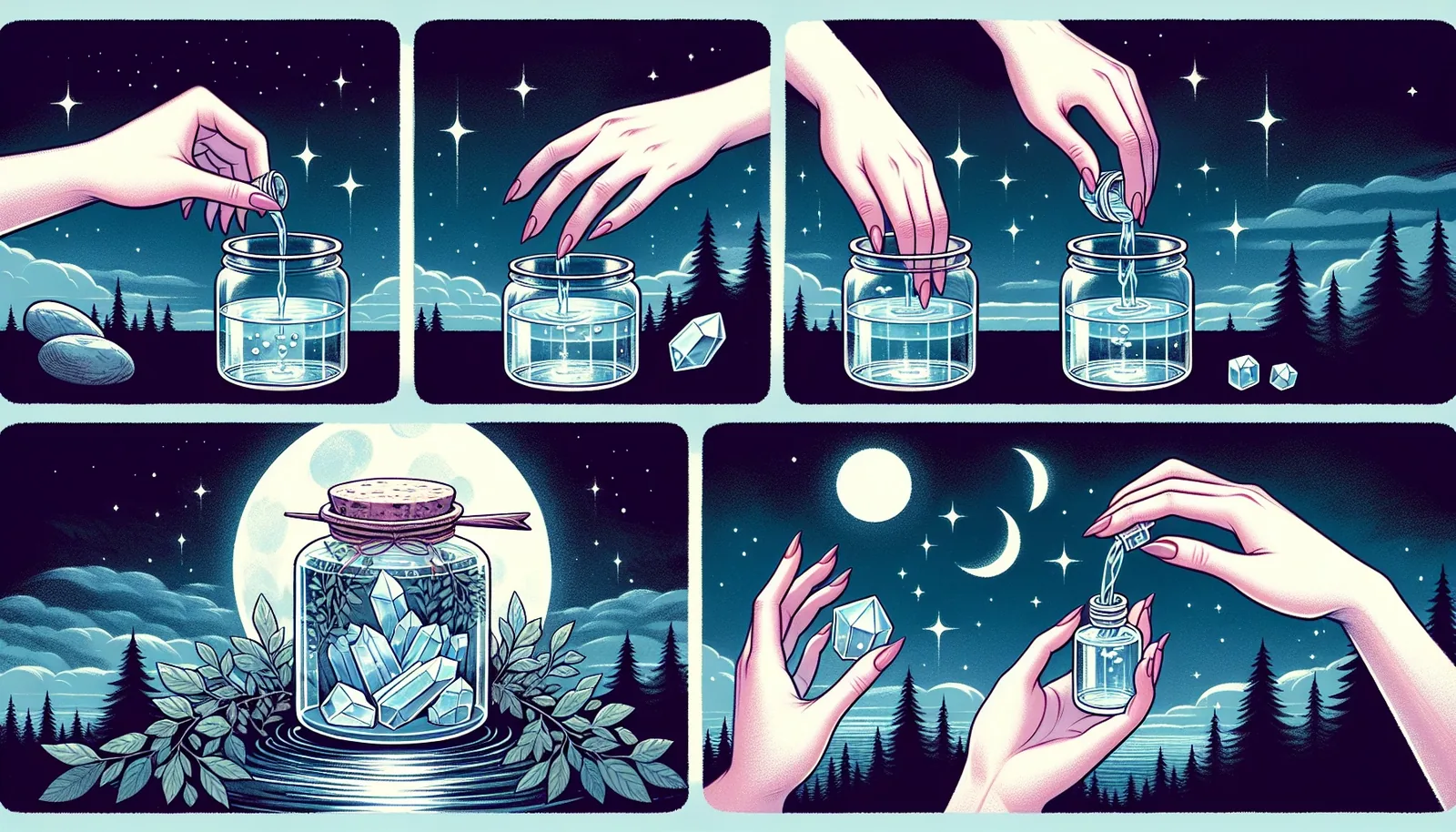
Whether a crystal can safely go in water depends primarily on its Mohs hardness, mineral composition, and whether it contains soluble or toxic compounds. Stones in the quartz family (Mohs 7) are generally safe for brief contact; selenite dissolves, malachite releases copper ions, and pyrite oxidizes to produce acid.
Why Hardness and Chemistry Both Matter
Mohs hardness is the most widely cited rule: stones at Mohs 7 or above are hard enough that water alone does not scratch or pit the surface during brief rinsing. Below Mohs 6, surface damage accumulates with repeated or prolonged exposure. But hardness is only part of the picture.
A stone can be hard enough to resist surface scratching yet still react chemically with water. Pyrite sits at Mohs 6 to 6.5 — respectable hardness — but its iron sulfide chemistry (FeS2) means that contact with water and oxygen triggers oxidation, eventually producing iron hydroxide and sulfuric acid. Malachite is soft (Mohs 3.5 to 4) and also chemically reactive: the copper carbonate dissolves partially in water, releasing copper ions.
The two questions to ask before putting a stone in water: (1) Is the Mohs rating 7 or above? (2) Does the mineral chemistry produce a soluble, acidic, or toxic product in water?
If the answer to either question is no, keep the stone away from water. See what a crystal vs. mineral actually is for background on why composition matters.
Stones That Are Safe for Brief Water Contact
The following stones are generally safe for rinsing and short soaks. "Brief" means a few minutes to an hour; none of these should sit in standing water for days.
Quartz family (SiO2, Mohs 7) — this group includes the most commonly used stones and all share the same safe chemistry:
- Amethyst: purple quartz, Mohs 7. Safe to rinse. Color fades with prolonged direct sunlight — see sun-safe crystals.
- Clear quartz: Mohs 7. Safe to rinse; colorless so no fading risk.
- Rose quartz: Mohs 7. Safe to rinse. Some specimens fade in extended sun exposure.
- Smoky quartz: Mohs 7. Safe to rinse; brown color caused by natural irradiation.
- Carnelian: chalcedony (microcrystalline quartz), Mohs 6.5 to 7. Safe to rinse.
- Aventurine: quartzite with fuchsite or hematite inclusions, Mohs 6.5 to 7. Safe to rinse.
Other water-safe stones:
- Black tourmaline (schorl, complex boron silicate): Mohs 7 to 7.5. Safe to rinse.
- Agate (banded chalcedony, SiO2): Mohs 6.5 to 7. Safe to rinse.
- Tiger's eye (pseudomorphic quartz after crocidolite): Mohs 6.5 to 7. Safe to rinse.
Stones That Should Not Go in Water
Dissolves or degrades in water:
- Selenite (gypsum, CaSO4·2H2O, Mohs 2): dissolves progressively in water. Even damp cloths damage the surface over time. This is one of the most commonly ruined stones in crystal care — do not rinse it, do not clean with sprays, and do not leave it in humid conditions.
- Calcite (CaCO3, Mohs 3): dissolves slowly in water, especially any slightly acidic water. Avoid soaking.
- Lepidolite (lithium mica, Mohs 2.5 to 3): layered mica structure absorbs water and can delaminate or crumble.
- Howlite (calcium borosilicate hydroxide, Mohs 3.5): porous and absorbent; water weakens the structure and can cause dyed pieces to bleed.
- Angelite (anhydrite, CaSO4, Mohs 3.5): reacts with water and converts slowly back to gypsum. Keep dry.
Toxic when wet:
- Malachite (copper carbonate hydroxide, Cu2(CO3)(OH)2, Mohs 3.5 to 4): releases copper ions in water. Drinking water containing copper at elevated levels causes nausea and other symptoms. Never make a direct-contact elixir with malachite; never drink water a raw malachite specimen has soaked in.
- Azurite (copper carbonate, Mohs 3.5 to 4): same copper toxicity concern as malachite.
- Lapis lazuli (aggregate of lazurite, calcite, and pyrite, Mohs 5 to 6): contains both water-soluble calcite and reactive pyrite. The stone degrades, and the pyrite component oxidizes.
Oxidizes and rusts:
- Pyrite (iron disulfide, FeS2, Mohs 6 to 6.5): in the presence of water and oxygen, pyrite oxidizes progressively. The reaction produces iron hydroxide (orange staining) and sulfuric acid. Do not submerge pyrite and do not store it in damp conditions.
- Hematite (iron oxide, Fe2O3, Mohs 5 to 6): rusts in water, leaving orange-red iron staining. Avoid prolonged contact.
Other stones to keep dry:
- Fluorite (CaF2, Mohs 4): soft enough to scratch and pit easily; long soaks cloud polished surfaces.
- Kyanite (Al2SiO5, variable Mohs 4.5 to 7 depending on direction): anisotropic hardness means certain planes scratch easily. Keep brief if rinsing at all.
Crystal Elixirs: Direct vs. Indirect Method
A crystal elixir (gem water) is water that has been charged by proximity to a crystal, used as part of a complementary wellness practice. Crystals do not add medically active compounds to water; this is a traditional and ceremonial practice, not a therapeutic one.
For any elixir practice, only use water-safe stones for the direct method (stone in water). For malachite, selenite, lapis lazuli, or any other stone on the avoid list above, use the indirect method: place the stone in a sealed glass container submerged in the water, or beside the container, so there is no physical contact between stone and drinking water.
Safe Cleaning and Cleansing
If you want to cleanse a crystal and are not certain of its safety in water, the safest methods are sound (singing bowl or bell), moonlight, smoke from sage or palo santo, or placement beside a piece of selenite. None of these methods require water. See how to cleanse crystals for step-by-step instructions for each method.
Salt water poses an additional risk: even for hard stones, prolonged salt water contact accelerates surface damage and can work into cracks. See salt-safe crystals before using any salt method.
| Stone | Mohs | Water safe? | Why |
|---|---|---|---|
| Amethyst | 7 | Yes (brief) | Hard quartz; fade risk from sun, not water |
| Clear quartz | 7 | Yes (brief) | Chemically stable SiO2 |
| Rose quartz | 7 | Yes (brief) | Hard quartz; some fade in sun |
| Smoky quartz | 7 | Yes (brief) | Hard quartz |
| Carnelian | 6.5–7 | Yes (brief) | Chalcedony (microcrystalline quartz) |
| Aventurine | 6.5–7 | Yes (brief) | Quartzite, stable |
| Black tourmaline | 7–7.5 | Yes (brief) | Hard boron silicate |
| Selenite | 2 | No | Dissolves in water |
| Lepidolite | 2.5–3 | No | Mica delaminates |
| Calcite | 3 | No | Dissolves slowly |
| Howlite | 3.5 | No | Porous, absorbent |
| Malachite | 3.5–4 | No | Copper ions — toxic |
| Azurite | 3.5–4 | No | Copper ions — toxic |
| Fluorite | 4 | No | Too soft; surface damage |
| Hematite | 5–6 | No | Rusts; orange staining |
| Pyrite | 6–6.5 | No | Oxidizes; produces acid |
| Lapis lazuli | 5–6 | No | Contains calcite and pyrite |
For charging methods that avoid water altogether, see how to charge crystals. For a full list of which stones handle sun exposure safely, see sun-safe crystals.