How to Charge Crystals: Moonlight, Sunlight, Sound and Intention
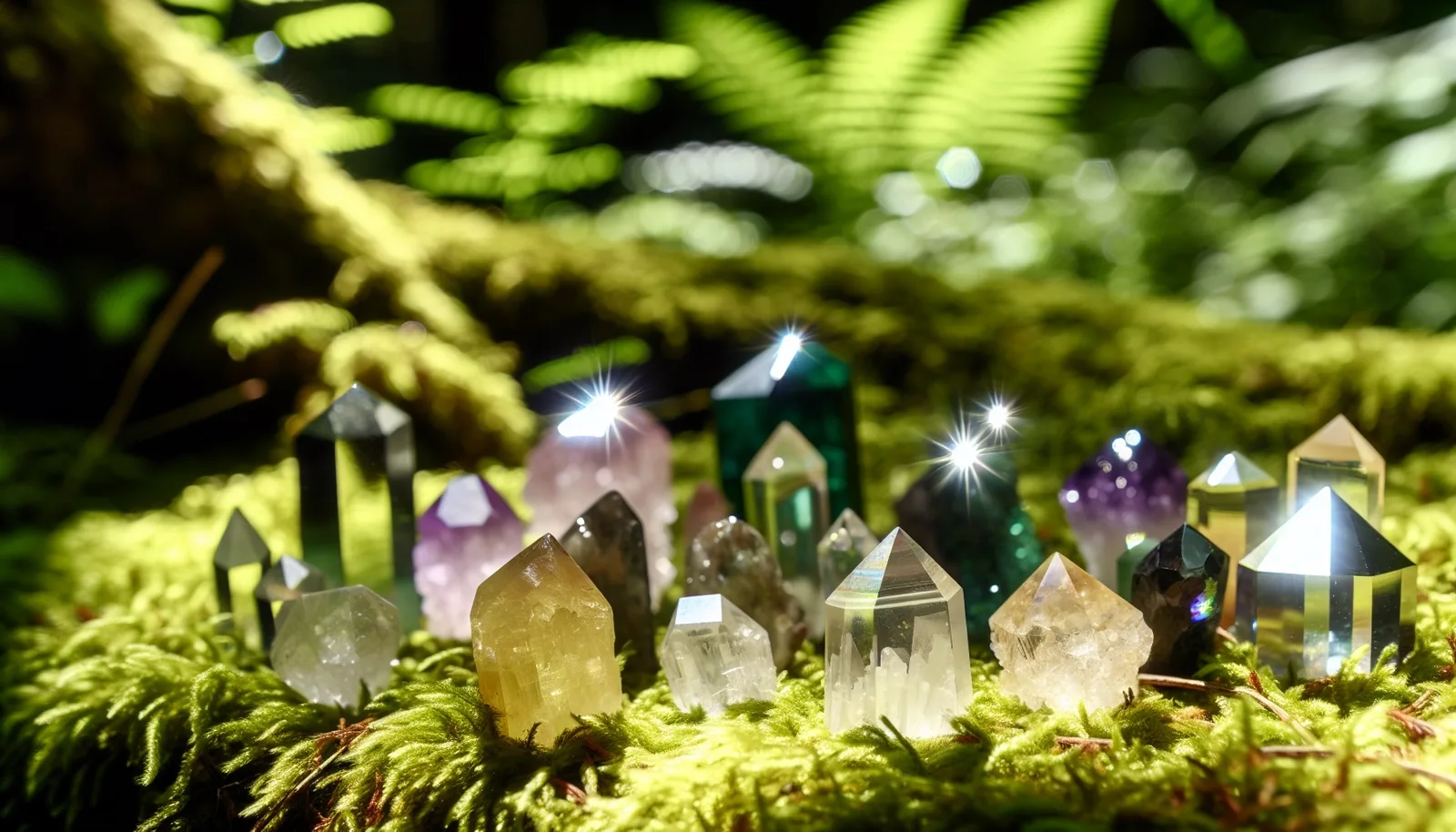
Charging a crystal is a practice of intentionally infusing it with energy — lunar, solar, sound, or intention — to prepare it for active use. Cleanse a crystal first, then charge it. The method that suits a stone depends on the stone's sensitivity to sunlight, moisture, and physical stress.
Start with a Cleansed Stone
A crystal is traditionally charged after cleansing, not before. Charging an uncleansed stone is thought in practice to lock in whatever energy it has accumulated rather than refreshing it. If you have not cleansed the stone yet, see how to cleanse crystals for all methods and stone compatibility.
Physical prerequisite: check whether your stone is sun-safe before using the sunlight method, and water-safe before any water-based charging. See sun-safe crystals and what crystals can go in water.
Method 1: Moonlight Charging
Outcome: Stone is exposed to full lunar light overnight, emerging refreshed and energetically aligned.
Suits: All stones without exception. Moonlight does not cause fading, heat, or moisture damage.
Steps: 1. Set the stone on a window ledge, balcony, or garden surface after moonrise. 2. Leave it until just before sunrise. If the stone is color-sensitive (amethyst, rose quartz, fluorite), retrieve it before direct morning sun reaches it. 3. Bring the stone indoors once charged.
In tradition: The full moon is considered the most powerful charging phase because the moon is at its brightest. The new moon is used in tradition for setting fresh intentions. Both are effective by practitioners' accounts; the choice reflects the intention being set.
Completion check: Stone has been in moonlight for at least a few hours.
Failure conditions: Leaving a soft or moisture-sensitive stone (selenite, Mohs 2; lepidolite, Mohs 2.5–3) on damp ground or in outdoor conditions where dew or rain could reach it overnight. If there is any chance of rain, place the stone indoors on a windowsill.
Method 2: Sunlight Charging
Outcome: Stone is placed in direct sunlight for one to four hours, absorbing solar energy.
Suits: Stones that are color-stable and hard — clear quartz, black tourmaline, smoky quartz, carnelian, obsidian, agate, hematite, garnet.
Do not use on: - Amethyst: purple color comes from Fe3+ ions stabilized by natural irradiation. Prolonged UV exposure bleaches the color irreversibly. Even a few hours in strong direct sunlight can begin to fade a specimen. - Rose quartz: pink color comes from microscopic fibrous inclusions or lattice defects; UV fades it to near-white over time. - Fluorite: highly susceptible to UV fading; some specimens bleach in under an hour of strong sun. - Celestite, aquamarine, kunzite, and most pale-colored stones: fade with prolonged sun.
For the full list of which stones are not safe in sunlight, see sun-safe crystals.
Steps: 1. Place the stone on a windowsill or outdoors in direct morning or late afternoon light. Midday sun at peak UV intensity is the highest fading risk. 2. Charge for 30 minutes to 4 hours, depending on practitioner preference and stone tolerance. 3. Retrieve the stone before the light intensifies or before the 4-hour mark for any stone whose color stability you are not certain of. 4. The stone is charged.
Completion check: Stone has been in sunlight for the chosen period without overheating or fading.
Failure conditions: Leaving a color-sensitive stone in direct sun for hours; placing a stone on a reflective surface (glass, mirror) that concentrates heat; using the sunlight method on a day with very high UV index without checking stone safety first.
Method 3: Sound Charging
Outcome: Stone is immersed in sustained sound vibration — from a singing bowl, bell, tuning fork, or recording — that practitioners describe as infusing it with resonant energy.
Suits: All stones. Sound is the safest method for delicate, soft, or porous stones that cannot tolerate sun or water.
Steps: 1. Place the stone on a stable surface near the sound source. 2. Strike the singing bowl or bell and sustain the resonance. With a tuning fork, hold it close to the stone without touching it. 3. Continue for 5 to 10 minutes or through a complete sound-bath session. 4. The stone is charged.
Practical note: Do not place the stone inside a singing bowl during use. The vibrations can chip polished surfaces and stones with distinct cleavage planes.
Completion check: Stone has been in the sound field for the full session duration.
Failure conditions: Placing the stone inside the bowl; using volumes high enough to cause the stone to vibrate off a surface.
Method 4: Intention Setting
Outcome: Stone is held and deliberately infused with a specific intention through focused visualization or spoken affirmation.
Suits: All stones. This method requires only the stone and your attention.
Steps: 1. Hold the stone in both hands at heart level. 2. Take several slow, deep breaths until the mind is reasonably settled. 3. State or think the intention clearly: the purpose for which the stone will be used, or the quality you wish to call into the space around you. 4. Hold for 2 to 5 minutes. Some practitioners visualize light filling the stone; others speak the intention aloud three times. 5. Set the stone down. It is charged.
In tradition: Intention setting is considered the active companion to all other methods — practitioners often pair it with moonlight or sound charging rather than using it alone.
Completion check: The practitioner has clearly stated the intention and held the stone for the full period.
Failure conditions: None from a physical stone perspective. The only failure in traditional terms is distraction or an unclear intention.
Method 5: Earth Charging
Outcome: Stone is buried in dry soil for 24 hours to several days, reconnecting with earth energy.
Suits: Hard, dense stones (Mohs 5 and above) in dry, clean soil. Practitioners most commonly use this for grounding-associated stones: smoky quartz, black tourmaline, obsidian.
Do not use on: Soft or porous stones — selenite, lepidolite, howlite, calcite, angelite. Soil moisture damages these minerals.
Steps: 1. Choose a dry area of garden soil, or use a pot of clean, dry earth indoors. 2. Bury the stone several centimeters deep. Mark or remember the location. 3. Leave for 24 hours to one week. 4. Retrieve, brush off, and wipe clean with a dry cloth.
Completion check: Stone has completed the burial period and is fully cleaned of soil.
Failure conditions: Burying in wet, clay-heavy, or chemically treated soil; losing track of the stone.
Method 6: Companion Stones
Outcome: Stone is placed on or beside another crystal considered to have amplifying or charging properties, most commonly clear quartz or selenite.
Suits: Any stone. Clear quartz clusters and selenite charging plates are widely sold for this purpose.
Steps: 1. Place the stone to be charged directly on a selenite plate or beside a clear quartz cluster. 2. Leave for 4 to 12 hours, or overnight. 3. Retrieve.
Important: Selenite is Mohs 2 and dissolves in water. Do not rinse a selenite charging plate — wipe only with a dry cloth. Keep it away from humid conditions.
Completion check: Stone has been in contact with the companion piece for the chosen period.
Failure conditions: Placing wet stones on a selenite plate; stacking heavy specimens on fragile clusters.
How Often to Charge
Charging frequency is set by individual practice. Common approaches: once a month (often timed to the full moon), after every extended use, or whenever the stone is felt to have lost vitality. There is no minimum interval; charging more often causes no physical harm to any stone.
Choosing a Method: Quick Reference
| Method | All stones? | Fading risk? | Time |
|---|---|---|---|
| Moonlight | Yes | No | Overnight |
| Sunlight | Color-stable only | Yes — amethyst, rose quartz, fluorite fade | 30 min – 4 hr |
| Sound | Yes | No | 5–10 min |
| Intention | Yes | No | 2–5 min |
| Earth burial | Mohs 5+ dry | No | 24 hr – 1 week |
| Companion stones | Yes | No | 4–12 hr |
For the complementary step that typically precedes charging, see how to cleanse crystals.