How to Cleanse Crystals: Methods and Which Stones They Suit
Crystal cleansing is a practice of removing accumulated energy from a stone — resetting it to a neutral state for renewed use. Six main methods are used: moonlight, water rinse, smoke, sound, earth burial, and placement with a companion stone. The right method depends on your stone's hardness, chemistry, and sensitivity to light or moisture.
What Cleansing Is (and Is Not)
In crystal tradition, cleansing addresses energetic rather than physical contamination. Practitioners use it after acquiring a new stone, after an intense period of use, or on a regular schedule. It is a complementary wellness practice; crystals do not replace medical or psychological care.
Physical cleaning — removing dust, oils, or surface grime — is a separate step. It is appropriate to wipe a stone with a dry or barely damp cloth before an energetic cleanse. The two should not be conflated: physical cleaning requires knowing your stone's water and chemical tolerances; energetic cleansing uses the methods below.
Prerequisites
Before choosing a method:
- Identify the stone. If you are unsure, see gemstone, crystal, or mineral — what is the difference and the relevant stone page for physical properties.
- Know whether your stone is water-safe (see what crystals can go in water).
- Know whether your stone is sun-safe (see sun-safe crystals).
- Know whether your stone is salt-safe (see salt-safe crystals).
If you cannot identify the stone with confidence, use moonlight or sound — the two methods that are safe for every stone without exception.
Method 1: Moonlight
Outcome: Stone is placed in lunar energy overnight, then moved back indoors.
Suits: All stones without exception. Moonlight is the universal method — no stone is damaged by it.
Steps: 1. Place the stone on a window ledge or outdoor surface where it will receive direct moonlight. If outdoors, a plate or cloth keeps it from sitting in wet ground. 2. Leave it overnight. Full moon and new moon are the most commonly used phases in tradition; any clear night works. 3. Retrieve the stone before direct morning sunlight reaches it if the stone is color-sensitive (amethyst, rose quartz, fluorite). 4. The stone is cleansed.
Completion check: The stone has been in position for at least a few hours of lunar exposure.
Failure conditions: Leaving a color-sensitive stone in direct sunlight once morning comes; leaving a porous stone (selenite, lepidolite) on damp ground overnight.
Method 2: Water Rinse
Outcome: Stone is briefly rinsed under cool running water.
Suits: Stones at Mohs 7 and above with no reactive chemistry — including amethyst, clear quartz, rose quartz, smoky quartz, carnelian, aventurine, and black tourmaline.
Do not use on: Selenite (Mohs 2, dissolves), lepidolite (Mohs 2.5–3, mica delaminates), howlite (Mohs 3.5, porous), malachite (copper ions, toxic in water), calcite, azurite, hematite (rusts), pyrite (oxidizes). For a complete reference table, see what crystals can go in water.
Steps: 1. Hold the stone under cool or lukewarm running water (not hot, which can cause thermal shock in some stones). 2. Keep the rinse brief — 30 seconds to a couple of minutes is sufficient. 3. Pat dry immediately with a soft cloth. 4. Set aside to air-dry fully before storing with other stones.
Completion check: Stone is rinsed, dried, and at room temperature.
Failure conditions: Using water on any stone from the avoid list; leaving a stone sitting in standing water; rinsing with hot water.
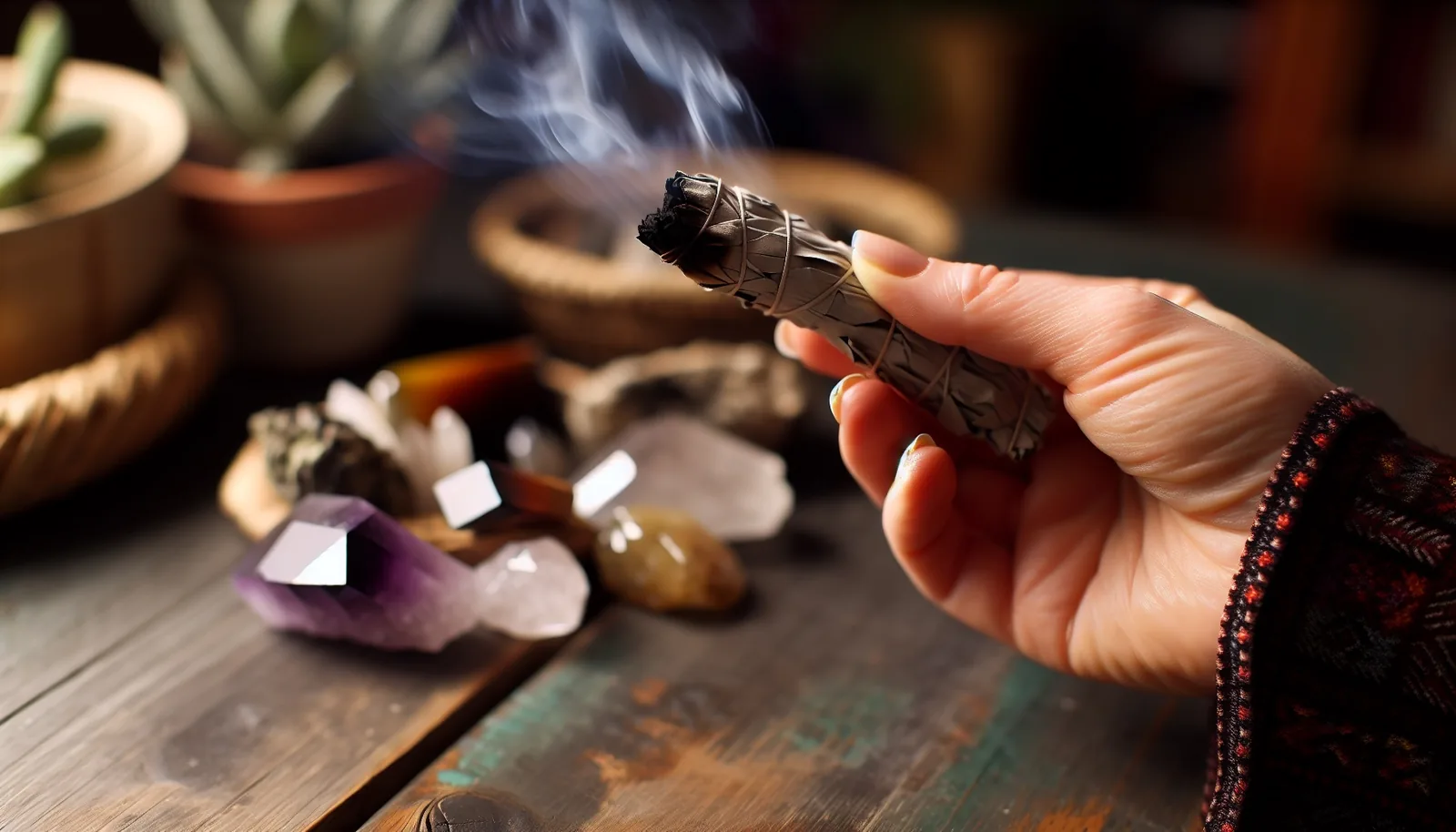
Method 3: Smoke Cleansing
Outcome: Stone is passed through smoke from dried herbs, resin, or wood.
Suits: All stones. Smoke does not require contact and poses no chemical or physical risk to any mineral.
Steps: 1. Light the smoke source (white sage, palo santo, cedar, incense, or resin on charcoal). Allow it to ash slightly so it smokes steadily without open flame. 2. Hold the stone in or just above the smoke for 30 to 60 seconds, rotating to expose all sides. 3. Set the stone down and allow it to cool if warm from proximity to the flame. 4. Ensure the smoke source is fully extinguished. Never leave burning material unattended.
Completion check: All surfaces of the stone have passed through smoke; the stone has no heat damage.
Failure conditions: Allowing the stone to contact open flame; using smoke in a poorly ventilated space (a health and fire safety concern, not a stone safety concern).
Method 4: Sound
Outcome: Stone is bathed in sustained vibration from a bowl, bell, tuning fork, or recorded tone.
Suits: All stones. Sound cleansing is particularly useful for large clusters, geodes, or collections of many stones at once — the sound reaches surfaces that would be difficult to expose by other methods.
Steps: 1. Place the stone or collection on a stable surface near the sound source. 2. Strike a singing bowl, bell, or tuning fork, or play a recorded sound bath at a comfortable volume. 3. Sustain for at least 3 to 5 minutes. 4. The cleanse is complete when the sound has fully faded.
Completion check: Stone has been in the sound field for the full session.
Failure conditions: Setting the stone inside a singing bowl — the vibration can chip or crack polished stones, especially along cleavage planes. Place it nearby, not inside.
Method 5: Earth Burial
Outcome: Stone is buried in dry soil or a container of dry natural earth and left for a period — typically 24 hours to a week.
Suits: Most stones with Mohs above 4. Practitioners often choose this for stones they consider heavily used or needing deep reset. Not suitable for porous or fragile stones that absorb moisture from soil.
Do not use on: Selenite, calcite, lepidolite, howlite, or any stone that absorbs moisture. Avoid clay-heavy or wet soil.
Steps: 1. Choose a dry patch of garden soil or fill a bowl with clean, dry earth. 2. Dig a small space and nestle the stone so it is fully covered. 3. Mark the location. Leave for 24 hours to a week depending on preference. 4. Retrieve the stone, brush off soil with a dry brush, and wipe clean.
Completion check: Stone has completed the burial period and is fully cleared of soil.
Failure conditions: Burying a stone in wet or clay-heavy ground; forgetting the location; using soil that contains fertilizers or chemicals.
Method 6: Companion Stones
Outcome: The stone to be cleansed is placed on or beside a larger piece of selenite or clear quartz for several hours.
Suits: Any stone small enough to fit on a selenite plate or beside a quartz cluster.
Tradition holds that selenite and clear quartz transmit cleansing energy to neighboring stones without requiring physical contact with water or light. No physical mechanism has been established; this is a traditional practice.
Practical note: Selenite plates sold for this purpose must be kept dry. Selenite (Mohs 2) dissolves in water — do not clean the plate by rinsing it; wipe with a dry cloth only.
Steps: 1. Place the stone to be cleansed directly on a selenite plate or beside a clear quartz cluster. 2. Leave for at least 4 hours; many practitioners leave overnight. 3. The stone is ready for use.
Completion check: Stone has been in contact with the companion stone for the full period.
Failure conditions: Stacking wet stones on a selenite plate (damages the plate).
Choosing a Method: Quick Reference
| Method | All stones? | Water contact? | Time needed |
|---|---|---|---|
| Moonlight | Yes | No | Overnight |
| Water rinse | Mohs 7+ only | Yes | 2–5 min |
| Smoke | Yes | No | 1–2 min |
| Sound | Yes | No | 5–10 min |
| Earth burial | Mohs 4+ (dry soil) | No (avoid wet soil) | 24 hr – 1 week |
| Companion stones | Yes | No | 4+ hr |
After cleansing, many practitioners charge their stones before returning them to active use. See how to charge crystals for the next step.