How to Tell If a Chakra Bracelet Is Real Gemstone
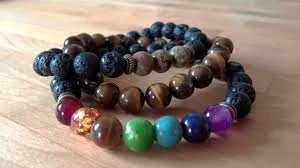
A real chakra bracelet uses identifiable natural gemstone beads — each chosen for its color correspondence to one of the seven chakras. You can verify authenticity at home using temperature, weight, magnification, a dye test, and a hardness check. A bracelet with glass, plastic, or heavily dyed common stone beads is not what it claims to be.
Chakra bracelets are part of a spiritual and energetic tradition; there is no scientific evidence that specific stones influence chakra function or physiology. The practical value of having real stones is the mineral quality of the material — its specific hardness, inclusions, and natural color variation — not a clinically demonstrated effect. Crystals and gemstones are a complementary practice, not a medical treatment.
What Stones a Chakra Bracelet Should Contain
The seven-chakra system assigns a color and energy center to each position along the spine, from the base to the crown. Most chakra bracelets use stones whose natural color matches each chakra color. Assignments vary by tradition and maker, but the following are the most commonly used stones:
| Chakra | Color | Common stones |
|---|---|---|
| 1. Root | Red or black | Red jasper (SiO2, Mohs 6.5–7), black tourmaline (Mohs 7–7.5), red agate |
| 2. Sacral | Orange | Carnelian (chalcedony, SiO2, Mohs 6.5–7), orange calcite |
| 3. Solar plexus | Yellow | Citrine (SiO2, Mohs 7), yellow calcite, tiger's eye |
| 4. Heart | Green | Aventurine (quartzite, Mohs 6.5–7), green jade, malachite |
| 5. Throat | Blue | Lapis lazuli (aggregate, Mohs 5–6), blue lace agate, sodalite |
| 6. Third eye | Indigo or purple | Amethyst (SiO2, Mohs 7), lapis lazuli |
| 7. Crown | Violet, white, or clear | Amethyst, clear quartz (SiO2, Mohs 7) |
Many bracelets include neutral spacer beads — often black (hematite, black onyx, or obsidian) — between the seven chakra stones to separate the colors and complete the elastic cord. A bracelet with more than seven distinctly colored beads is using spacers; this is normal.
For more on what these minerals physically are, see gemstone, crystal, or mineral: what is the difference.
Prerequisites
Before checking a bracelet:
- Know which stones are supposed to be in each position (the table above).
- Have a 10x jeweler's loupe or magnifying glass if possible ($10 to $25 from most hardware retailers).
- Have a cotton ball and nail polish remover (acetone) for the dye test.
- Have access to a piece of glass (a drinking glass or glass plate) and a steel knife blade for the hardness test.
Steps to Check Authenticity
Step 1: Check the temperature of each bead. Hold the bracelet in your hands and press each bead against your inner wrist for 5 to 10 seconds. Real stones — particularly quartz-family beads at Mohs 7 — stay noticeably cool against skin for longer than glass or plastic. Glass warms to skin temperature within a few seconds. Plastic warms almost immediately.
If multiple beads feel immediately warm or all beads feel identical in temperature behavior, suspect glass or plastic.
Step 2: Check the weight. Hold the bracelet in your palm and compare it to a similar bracelet or a handful of loose stones you know are genuine. Genuine stone beads feel heavier than glass of the same apparent size; plastic is lighter still. An all-natural-stone chakra bracelet of standard 8mm beads has noticeable heft.
Step 3: Examine inclusions under magnification. Use your loupe to examine the interior of each bead, particularly the clear or pale ones. Real quartz and quartz-family stones show natural inclusions: veils, growth lines, fracture planes, and sometimes tiny mineral needles. Glass shows rounded gas bubbles and sometimes swirl patterns from the cooling melt.
Uniformly perfect, bubble-free "crystal-clear" beads at a low price are a warning sign. Some genuine polished stones are very clean, but combined with a low price and uniform appearance across many beads, perfection suggests glass.
Step 4: Check for dye bleeding. Turquoise-colored and blue-green beads in a chakra bracelet are frequently dyed howlite rather than genuine lapis lazuli or turquoise. Pull adjacent beads apart on the cord to reveal the elastic string beneath. If the string is discolored where it contacts the bead, the bead has been dyed.
For the acetone test: dampen a cotton ball with acetone and press it firmly against the back of a blue, green, or turquoise bead for 5 seconds. Color transfer to the cotton means dye has been applied to a common stone base. This test applies to any unusually vivid color.
Step 5: Check the hardness of key beads. Quartz-family beads (amethyst, clear quartz, rose quartz, carnelian, aventurine, citrine) are Mohs 7 — hard enough to scratch a glass surface. Hold the suspect bead firmly and drag an edge across a glass plate in an inconspicuous test area. A real quartz bead leaves a faint scratch line on glass; a glass bead does not scratch glass (both are approximately the same hardness) and leaves no permanent mark.
Caution: This test is mildly abrasive on the bead surface. Use the back or the part of the bead that sits against the inside of the wrist, not the face.
Step 6: Verify the color sequence. Compare the bead colors against the chakra color order (red/black, orange, yellow, green, blue, indigo/purple, violet/clear). A bracelet with obviously wrong colors, missing colors, or substituted pale imitations in key positions (pale pink glass for "amethyst," bright lime green plastic for "aventurine") has been assembled without reference to the traditional system.
Step 7: Ask the seller specific questions. Before purchasing, ask: What stone is the orange bead? What is the yellow bead — citrine, yellow calcite, or tiger's eye? Have any beads been dyed? A seller of genuine chakra bracelets can answer by stone species. Answers like "healing crystal bead" or "sacral chakra stone" without naming the mineral are vague and should lower confidence.
Completion Check
A bracelet is likely to contain genuine stones if: - Beads stay cool significantly longer than 5 seconds against skin - Weight is noticeably substantial - Beads under magnification show natural inclusions rather than gas bubbles - No dye transfers on the acetone test - Quartz-family beads scratch glass - Colors match the expected chakra sequence
No single test is conclusive. If three or more tests raise doubts, the stones are likely not what they are represented as.
Failure Conditions and What to Do
If tests indicate fake or heavily dyed beads, the bracelet contains misrepresented materials. Options:
- Return the item if the seller's return policy permits.
- Use it as a decorative piece, knowing the materials are what they are.
- Purchase a replacement from a seller who names stones by mineral species and can answer treatment questions directly.
A bracelet made of genuine stones from a transparent seller will cost more than a mass-produced bracelet from a general marketplace. A real seven-stone chakra bracelet with named natural minerals (amethyst, carnelian, citrine, aventurine, lapis lazuli) at a standard 8mm bead size typically retails between $20 and $60 from a specialist crystal retailer; significantly lower prices are a reliable indicator of misrepresented materials.
Caring for a Genuine Chakra Bracelet
Once verified as real stones: - Lapis lazuli (Mohs 5–6) is relatively soft; avoid abrasive surfaces and keep it away from ultrasonic cleaners. - Avoid getting the bracelet wet in salt water or prolonged submersion; the elastic cord degrades in water. - Clean by wiping beads individually with a dry or barely damp cloth. - Cleanse energetically using moonlight or sound rather than water; see how to cleanse crystals for methods that suit all stones including lapis lazuli.